
The Refreshing
Echo Lake Recreation Area and Wildlife Refuge

This small lake’s 1.5-mile perimeter is primarily cattail reeds, allowing fishing from the banks in very few locations, one of which is a peninsula that juts out toward deeper water. Several boats float on the lake, joined by nearly a dozen paddleboards. Those passengers are mostly lying down or sitting, the men shirtless, the women in bathing suits, soaking up the midday sun while it lasts. Clouds dropping virga and a few sprinkles of rain move in from the west, cooling temperatures, and causing boarders to retreat back to the shore. After all, it is only the 8th of May in the mountains.
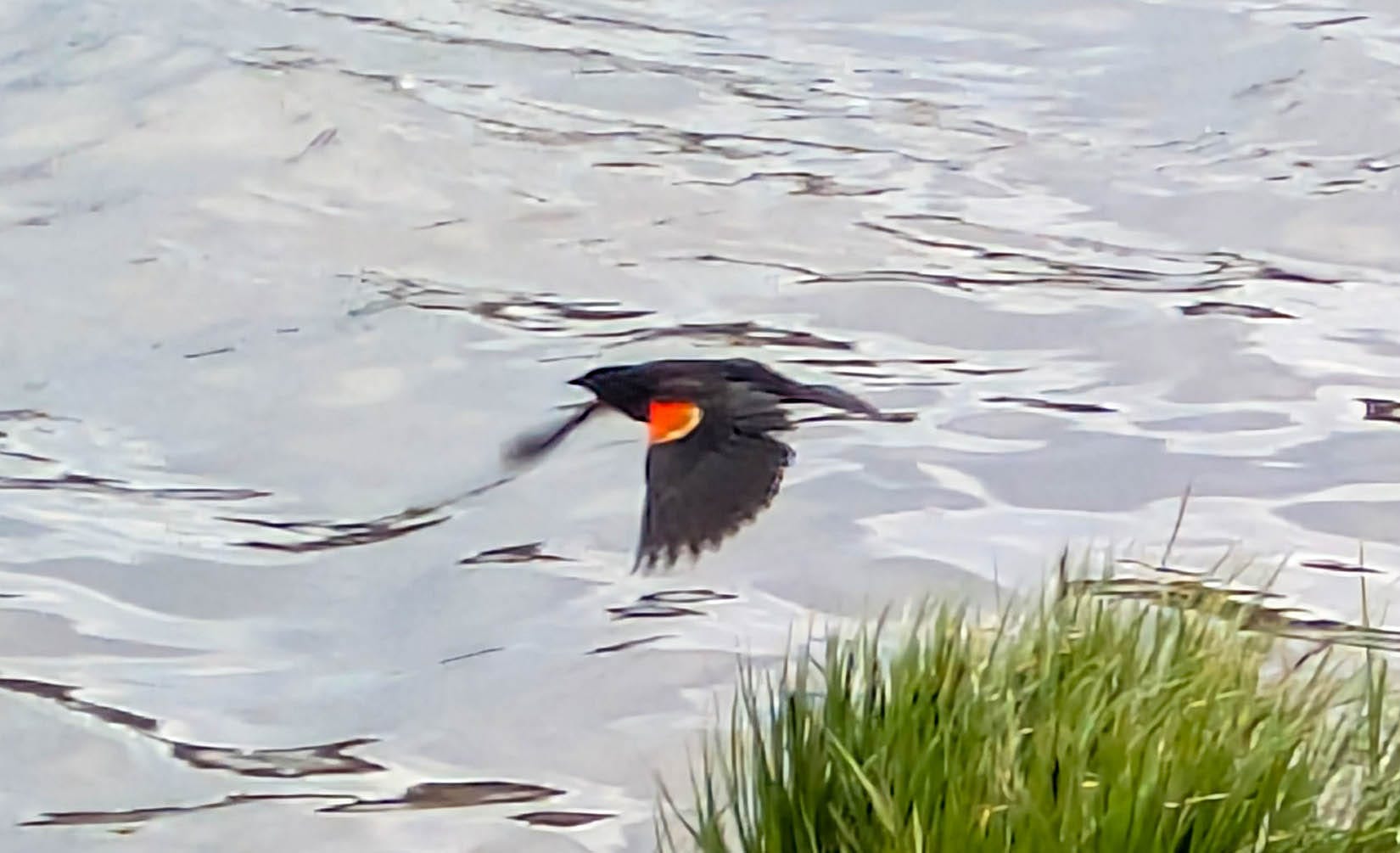
Bob and I stop our journey to Escalante, Utah, and carry our lunch and camp chairs closer to the reeds. Redwing blackbirds abound, sitting atop waving cattails bursting with last year’s seed fluffs. Some fly deeper into more protective nesting areas. Some pick bugs out of the shorter grass.
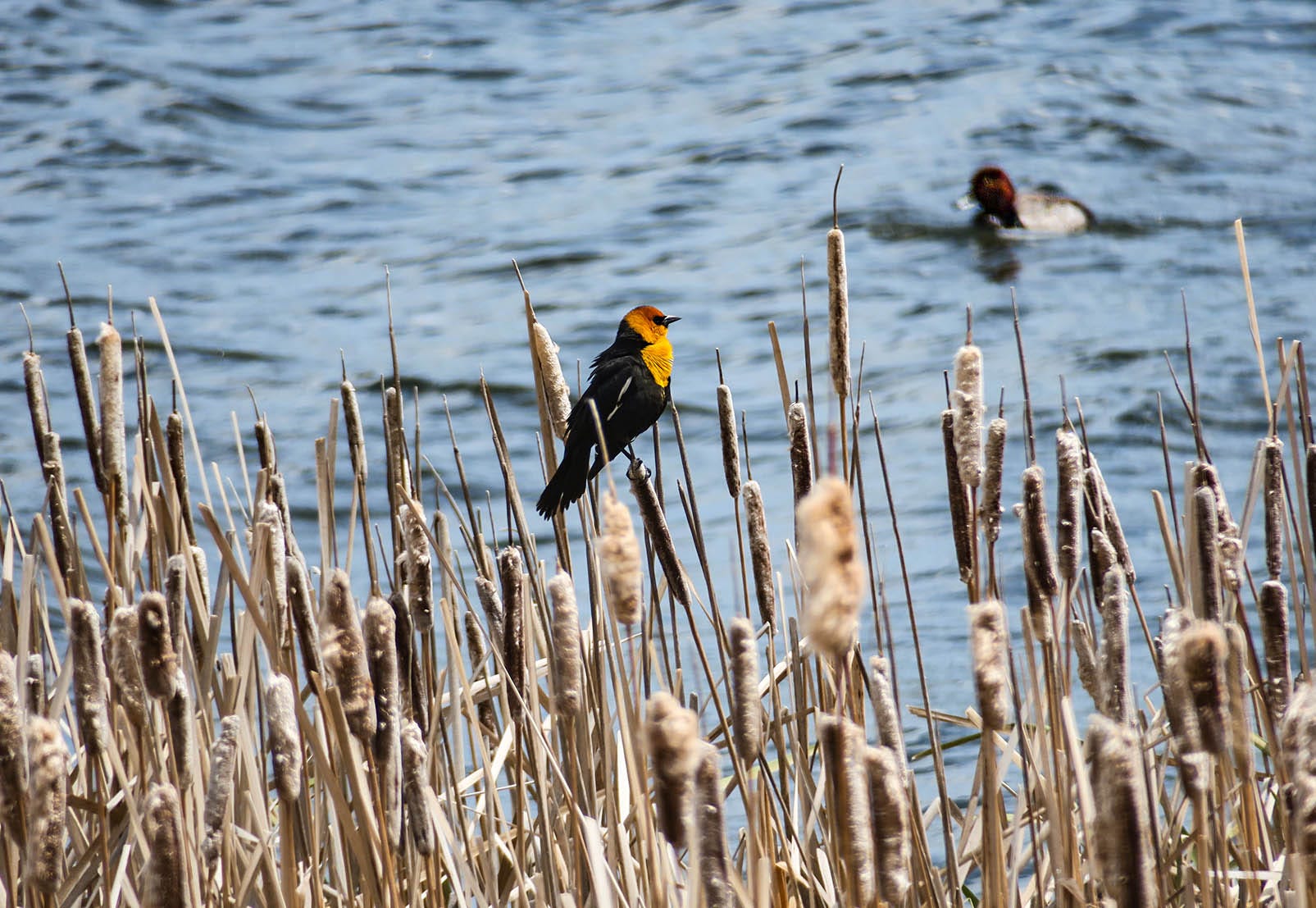
Last Spring, we discovered that yellow-headed blackbirds also migrate to this location. Having never seen this bird before, except here, I was hoping it would show up again. Fewer in number than the redwings, it dominates in rank, perhaps due to its bigger body, perhaps due to a more aggressive personality. The redwings avoid their approach. Its call is not as softly sweet as the smaller songbirds, but instead chirps a few notes followed by a long, harsh rasp or series of clicks. Brilliant yellow feathers cover the head and run down the throat to the upper chest. It wears a black mask across its eyes. The beak is also black. Broad white wing bars become visible when in flight.
While enjoying both blackbird species, we have paid less attention to the ducks and geese on the lake. The ducks dip their heads, bottoms up, to feed on aquatic vegetation or invertebrates. The geese squawk from a hidden cove. Then we see it. A larger bird soars high over the lake’s surface, its wingspan nearly 6 feet across. The underside and head are white, while the rest of the feathers look much darker. Even from a distance, the shape is recognizable as an osprey. From on high, a shadow glides closer to the lake, circling lower, eyes tracking the underwater movements of fish. Suddenly, the impressive bird folds its wings, pressing them to its sides, then dives headfirst like a missile or spear, striking the water with surprising force. The splash is loud and spreads white froth out from the impact point. We watch the raptor fly off, awkwardly navigating with wet wings. It does not seem to have caught any prey. Flapping above the water’s breeze-stirred surface, the osprey slowly gains elevation and disappears into treetops beyond the lake. We don’t see it for a while, until, again, from a distance, the hunter circles, then drops to a height that allows its compact wing-tucked form to slam into the water a second time. Again, no luck. It flaps heavily, eventually gaining altitude before disappearing out of view. Perhaps some recovery time is needed between strikes, but I can’t say for sure. We lose track of the predator once more as we finish lunch and turn our attention back to the blackbirds.
A short time later, the osprey returns for a third attempt. Its white belly and pale-colored wingspan flash when turning right in front of us. The bird rises just a bit higher before folding its wings, compressing its form to pierce the surface with increasing velocity. This time, when it emerges, a fish hangs from clenched talons as the captor rises to circle the lake. We find this behavior peculiar, thinking he is risking losing the catch back into the water. Is he waiting for the fish’s inevitable suffocation? It almost seems to be bragging, showing off his prize to the fishermen below, as if to say, “See, I caught one, I caught one! Where’s yours?” After all this activity and perhaps having enjoyed its lunch, the bird settles near us at the top of a Ponderosa tree. The solitary figure preens ruffled feathers, balancing with the wind sway of the branches.
For us, this all feels so special, to be an observer of the entire scene. How lucky. I could have stayed there all day if not for Bob nudging us on our way, supposedly to Escalante. It’s more about the journey than the destination.
Wish I had been there birding with you. Your book is wonderful.