
Timing is Everything
Escalante River Hike

Morning cloud bands roll in from the west. Together, the shades of grey hanging over the expansive, white-capped sandstone formations paint pale desert hues lacking brighter colors. Not really threatening heavy rain, the cloud cover blocks the sun’s intensity. At best, light showers might spring up later in the afternoon. All in all, we figure the weather shouldn’t affect today’s planned hike to the natural bridge, ruins, and arch along Utah’s Escalante River. What could be more pleasant than following a relatively flat trail offering cottonwood shade and cool running water?
The 10-to 12-car parking area at the trailhead is full, so we drive across the river to park on the edge of the highway. The less-used trail on this side leads through a stand of last year’s 8-foot-high, brown pampas grass. New verdant stalks grow chest high. The path’s deep surface consists of the finest peach-colored sand, which one might expect to see running smoothly through an hourglass. Each sinking step forward gives our legs today’s workout. Another older couple, returning from a short stroll, remarks how delightful their morning outing has been. It will be nice to have a more relaxing day hike in contrast to the places we have been exploring up till now.
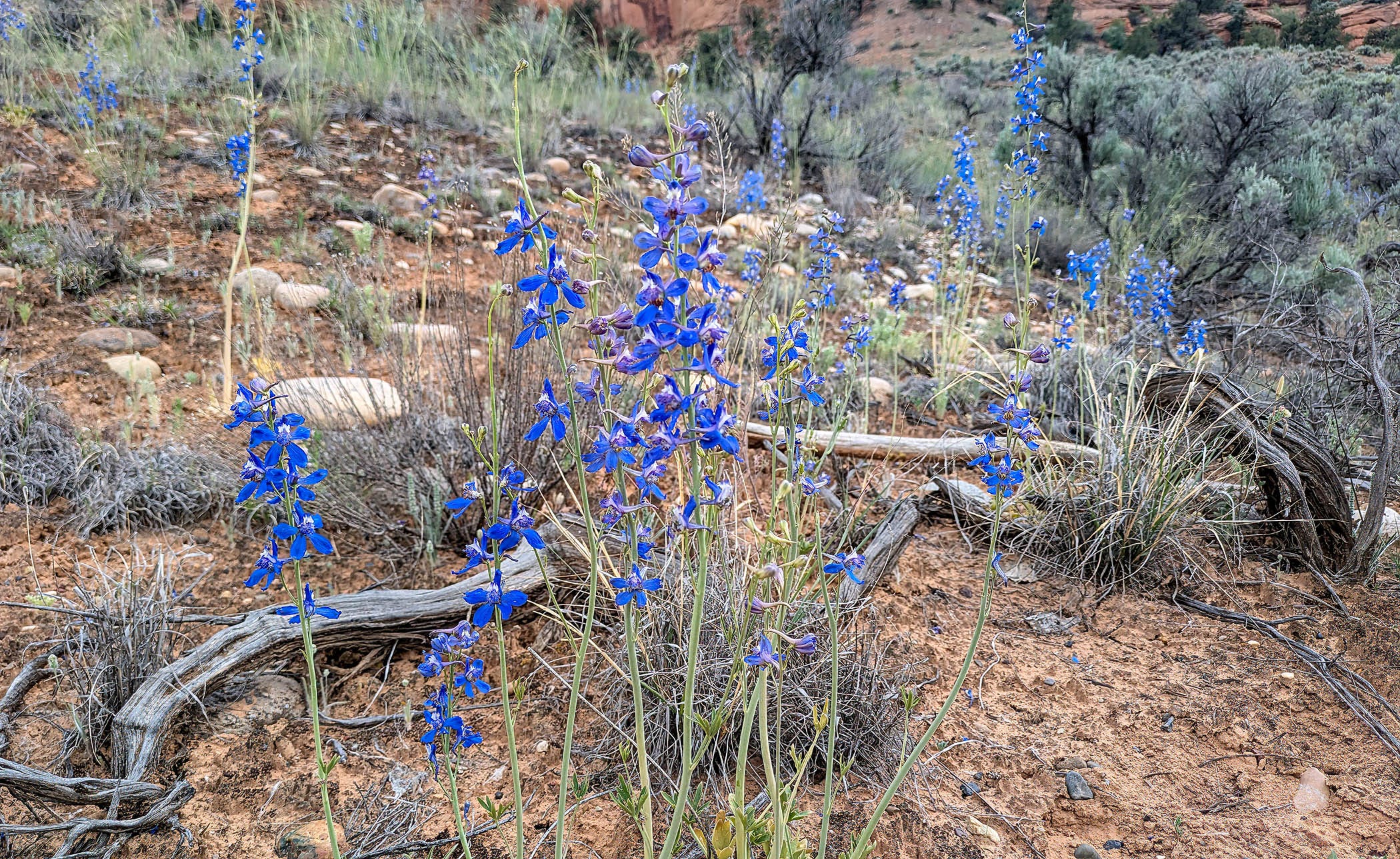
It is around 1:30, when I stop to photograph a patch of larkspur thriving in the desert environment beneath red cliffs. A friendly man wearing a T-shirt and shorts stops to tell us that when he left earlier in the morning, he encountered swarms of mosquitoes. Eric describes their ferocity, recounting how he had to keep moving or they would surround him. I reply that it is interesting information since we sat out along the creek for 3 hours yesterday without seeing any biting bugs. Luckily, our late start has missed the unfortunate mosquito event.
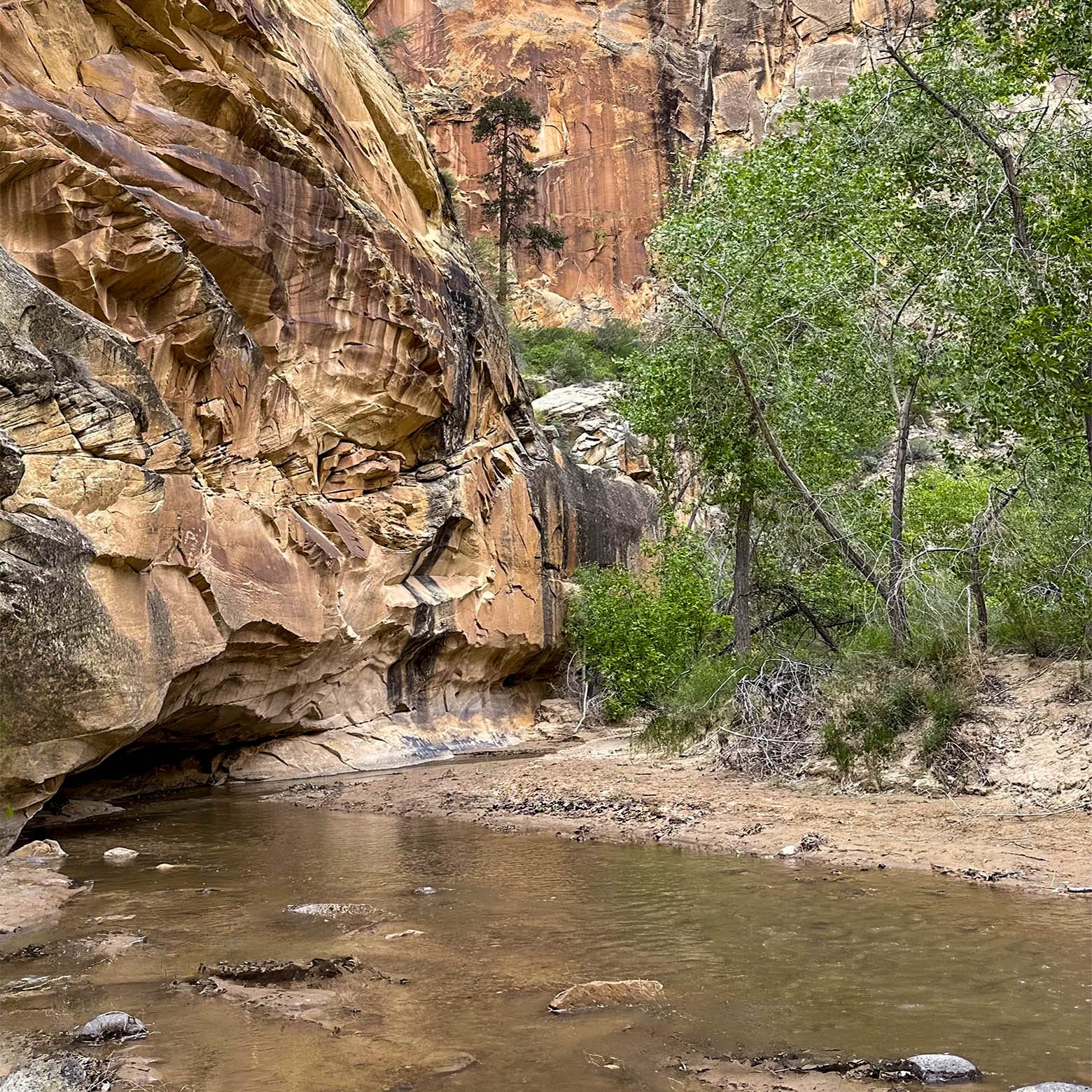
The trail maneuvers around sandstone cliffs and outcrops, taking us from one side of the river to the other. Crystal-clear water runs ankle to calf-deep, making the multiple crossings easy to manage. Wet banks create short slides down to 15-foot-wide channels. A soft, sandy bottom and smooth rock slabs provide surprisingly stable footing in between sections of loose stones. The shallow current brushes our bare legs in a non-threatening manner, just challenging balance enough to be fun. Such a perfect cool treat plays give-and-take with drier moments of captured canyon heat.
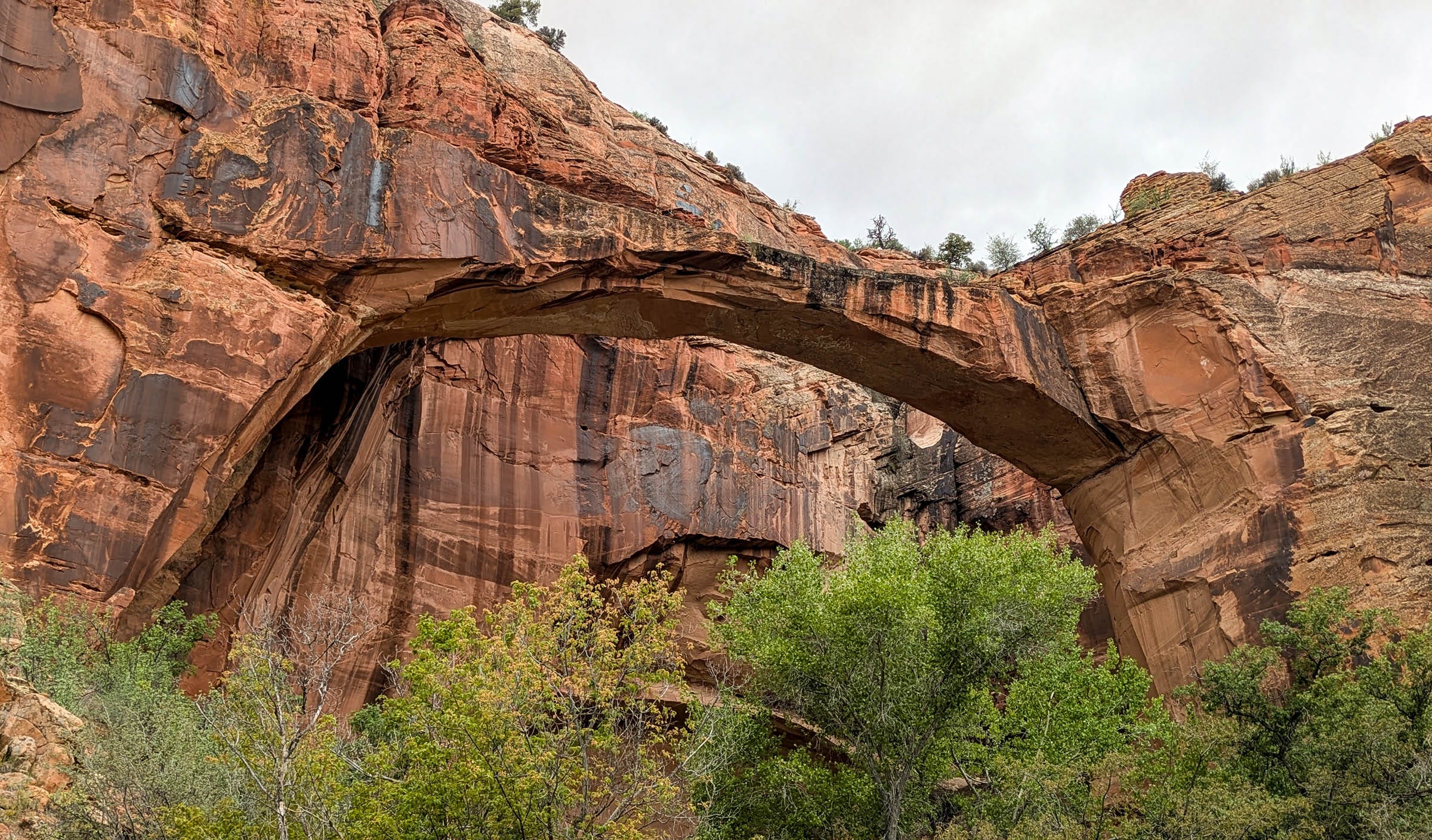
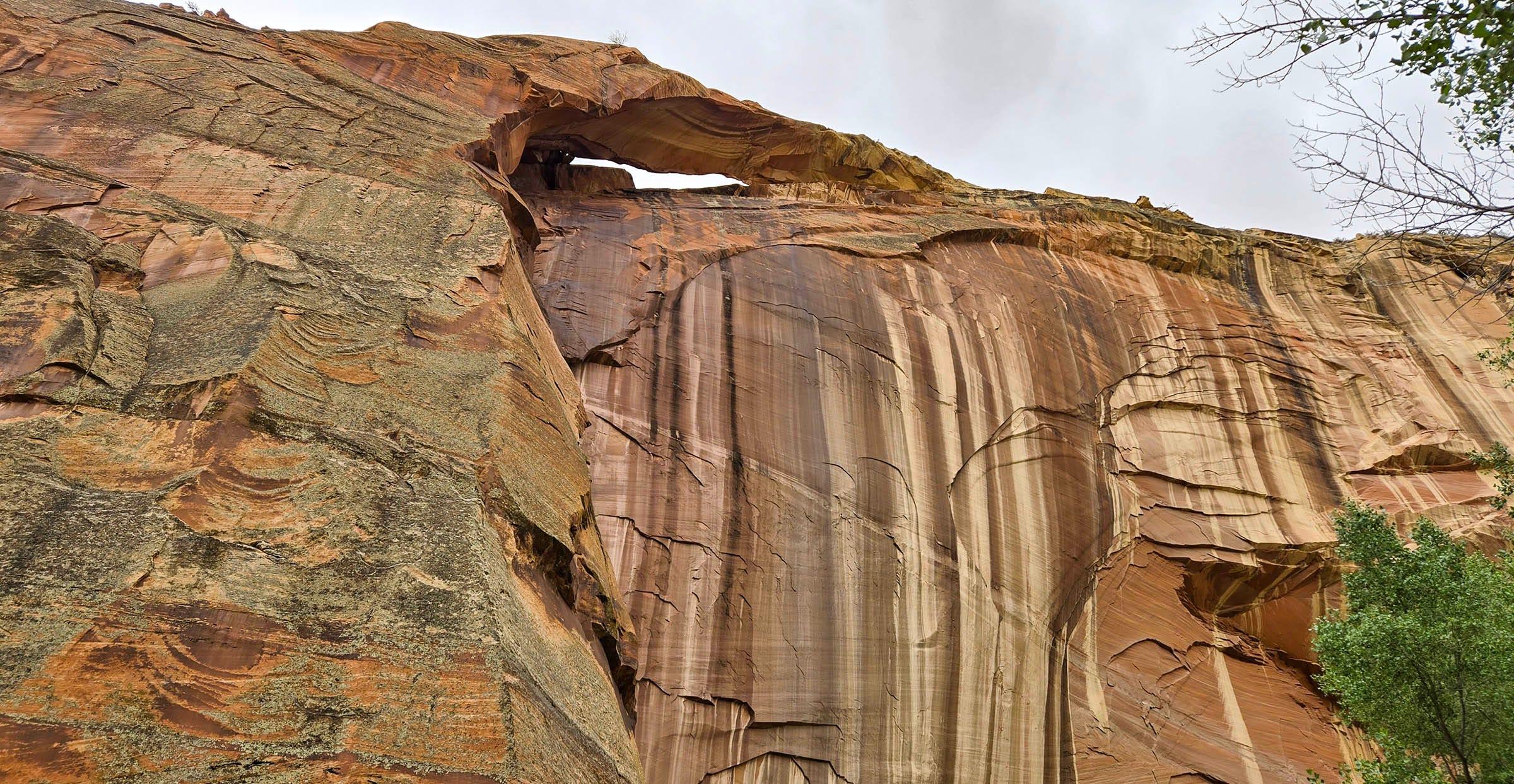
In less than 2 miles, a bleached-out log in the middle of a meadow seems a perfect place for a snack. Scattered grasses and yellow flower clumps sway in response to occasional breezes. Surveying the surroundings, Bob catches sight of the natural bridge barely distinguishable from its crimson rock background. Hoisting our packs, we cross the river again to get a better look. Closer to the bridge, the perspective changes to 3-D. A piece of grey-blue sky clearly separates the massive,130-foot-high arched structure from desert-varnished sandstone walls. To our eyes, bridges and arches may look the same with their curved architectural forms. The distinction lies in how the shape was sculpted. Bridges have been eroded by running water from below, while arches are primarily formed by ‘weathering’ from wind. Science aside, we stand silently taking in its magnificence.
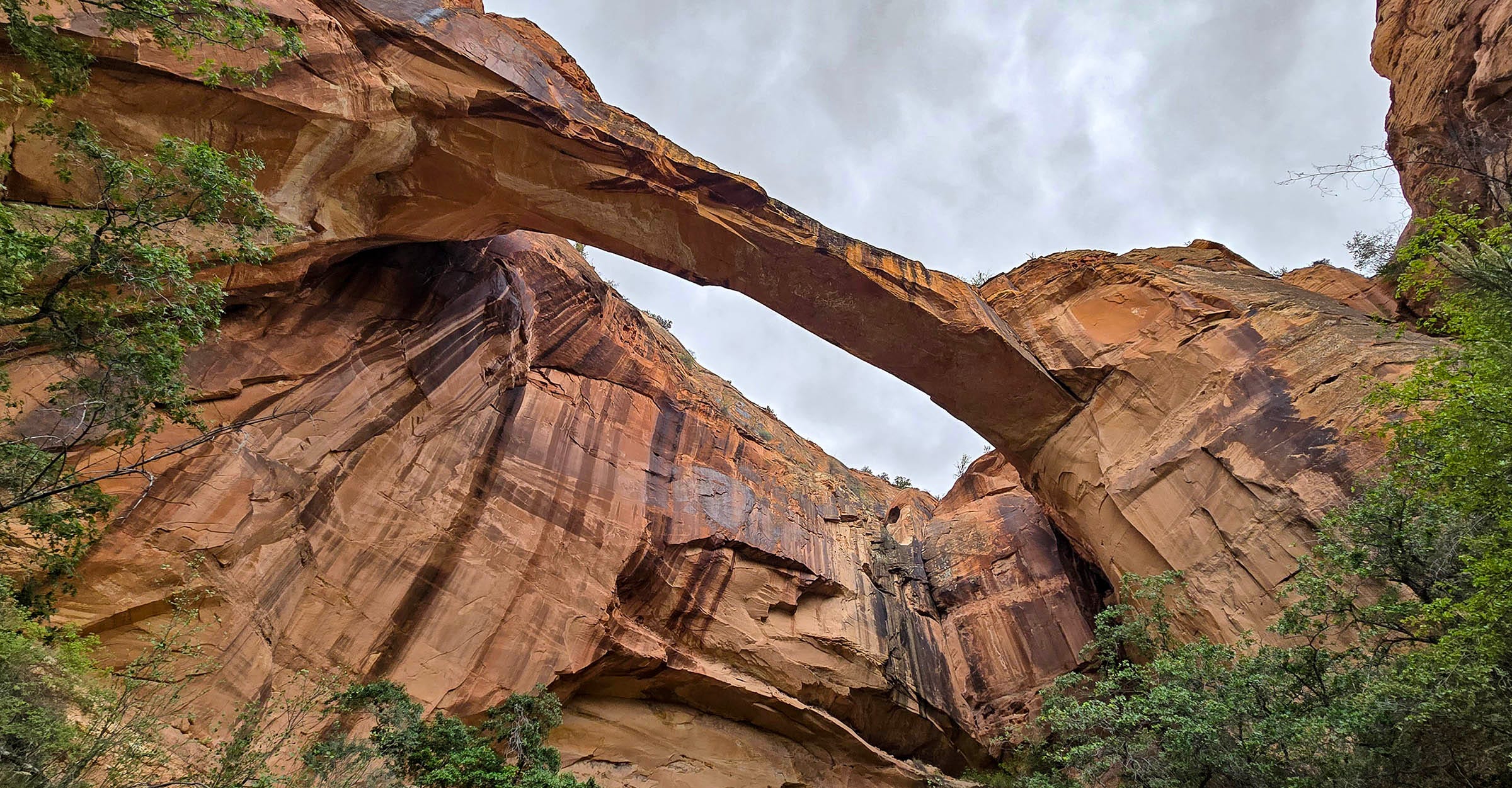
A guy wearing a tight-fitting hoody and a face mask and a gal dressed in shorts arrive from the opposite direction. They say they walked right past the bridge, never seeing it, on their way to the ruins a half mile farther. Rather suddenly, we notice mosquitoes for the first time. Maybe this is why the guy has shielded nearly every inch of his body. Bob and I pull out bug repellent (always be prepared) and extra clothing, while the annoying insects emerge from all directions. Needless to say, the situation cuts short our time appreciating the impressive wonder poised above us. We begin to understand the necessity to keep moving in order to prevent being swarmed by hordes of blood suckers. So close to the ruins, we scurry along rather than turning around. We wish there were a way to bypass the malevolent abode of cottonwoods and remaining river crossings. Then, it begins to sprinkle. On one hand, the moisture is welcome, cooling us down without soaking clothing. On the other hand, even more mosquitoes materialize. We pull out our stashed rain jackets, not to protect us from the rain, but in the hope of creating an impervious layer around our bodies.
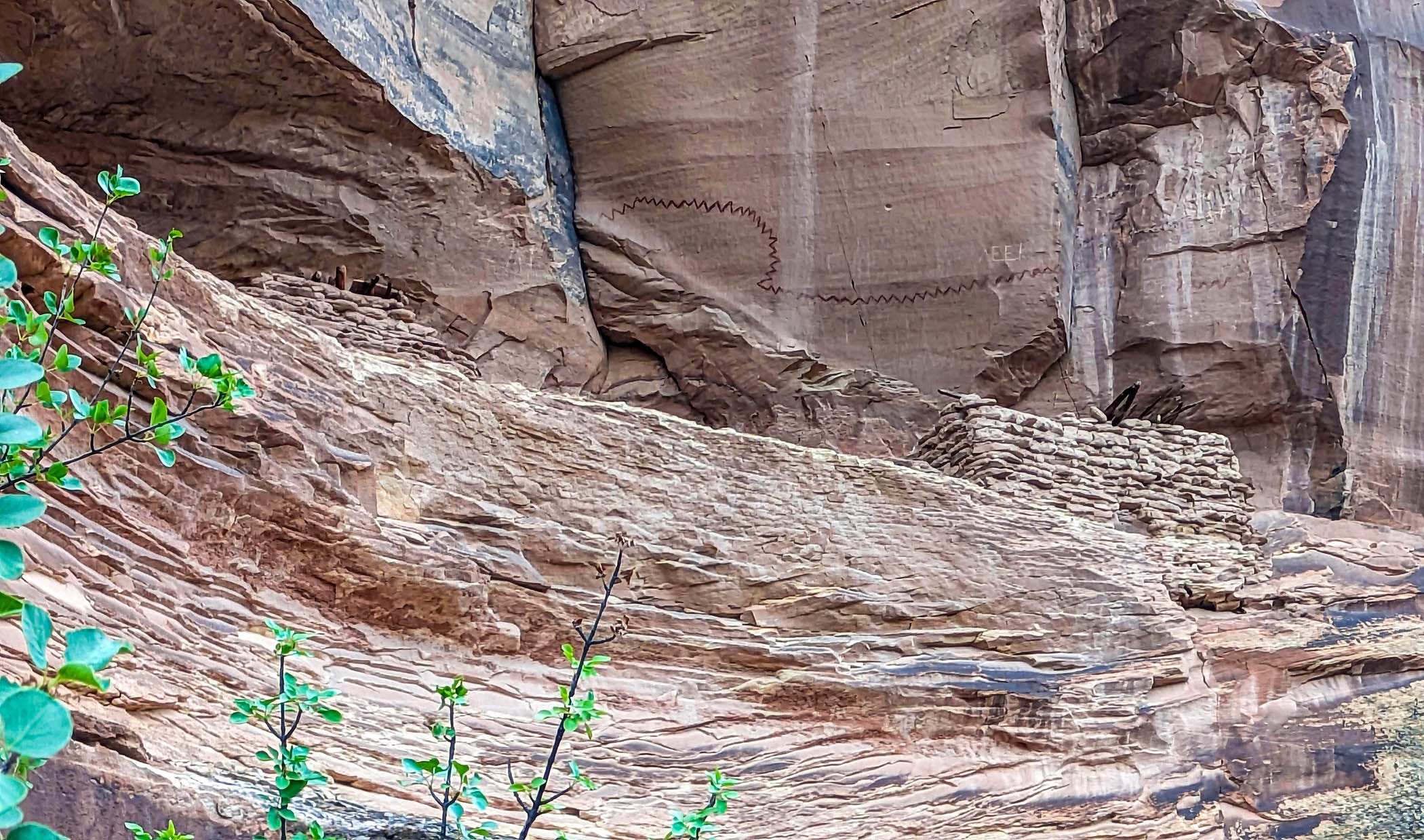
Two small ruins reside on an inaccessible high ledge a short distance from the river. A long zig-zag red pictograph runs above them. They are safely out of reach from tourist invasion. Still encircled by mosquitoes, I start to care less about the ruins or the small arch tucked around a corner from them. Instinct takes over, calling for a quick retreat back to the van now, 2 miles away. Even though we were warned about (and dismissed) the possibility, the abrupt change from a beautiful day’s hike to a mosquito nightmare feels shockingly unbelievable. In case we needed reminding, not all of nature’s surprises are wildly enjoyable.
I count 6 river crossings on the way back, although I won’t swear to the number as my mind is preoccupied. We reluctantly roll up pant legs, exposing skin. Caution thrown to the wind, we rush through the water and slip up the muddy banks. As we near the van, the sun breaks through evaporating clouds. Whether it is this change in climate or location, the mosquitoes diminish in number; such a curious event for our last adventure in Escalante.